
Reliability Evaluation of a Hybrid Renewable Energy Complex System with Weibull Failure Laws Using Minimal-cut Set Approach
DOI:
https://doi.org/10.62933/w2wpgs59Keywords:
Reliability , Weibull failure law , Failure rate , Shape parameter and MTSFAbstract
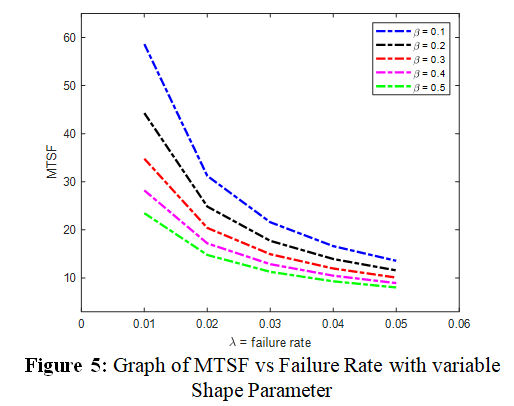
Most rural locations in Nigeria are still grappling with epileptic power supply while others await connection to national grid due to their remote locations. In order to meet the required energy demands at these locations, penetration of renewable energy sources has become so paramount to the society and the nation at large. Renewable energy sources are very attractive energy sources due to their abundant available nature, highly clean energy source because of their environmental friendly nature and cheap continuous nature. However, because of their intermittent available property, hybrid renewable energy sources are used to counter this drawback. In this study, hybrid renewable complex energy system with five components subsystem is evaluated. The complex system was first converted to a series-parallel system using the Minimal-cut set approach. The variables associated with repair and failure rates of each component is assumed to follow a Weibull probability density function. The derivation of Mean Time to System Failure (MTSF) and reliability of the system was obtained via reliability mathematics techniques. The MTSF and reliability of the complex renewable system was calculated for random values of component parameters such as failure rate , shape parameter and operating time (t) of the system components. The dynamic responses of these reliability indices have been presented both graphically and numerically with arbitrary numerical values of the components parameters.
References
[1] Ang T-Z, Salem M, Kamarol M, Das HS, Nazari MA, Prabaharan N. A comprehensive study of renewable energy sources: Classifications, challenges and suggestions. Energy Strateg Rev 2022;43:100939. doi:10.1016/j.esr.2022.100939.
[2] Muh E, Tabet F. Comparative analysis of hybrid renewable energy systems for off-grid applications in Southern Cameroons. Renew Energy 2019;135:41–54. doi:10.1016/j.renene.2018.11.105.
[3] Chowdhury A, Miskat MI, Ahmed T, Ahmad S, Hazari MR, Awalin LJ, et al. Feasibility and sustainability analysis of a hybrid microgrid in Bangladesh. Int J Electr Comput Eng 2024;14:1334. doi:10.11591/ijece.v14i2.pp1334-1351.
[4] Okakwu IK, Olabode OE, Alayande AS, Ade-Ikuesan OO, Sulaiman AM. A Comparative Analysis of Techno-Economic Viability of Hybrid Renewable Systems as Sustainable Alternative for Energizing Selected Base Transceiver Station in Ogun State, Nigeria. Mindanao J Sci Technol 2020;18:16–34. doi:10.61310/mndjsteect.0979.20.
[5] Okakwu IK, Olabode OE, Akinyele DO, Ajewole TO. Evaluation of Wind Speed Probability Distribution Model and Sensitivity Analysis of Wind Energy Conversion System in Nigeria. Iran J Electr Electron Eng 2023;19. doi:10.22068/IJEEE.19.2.2550.
[6] Okakwu I, Akinyele D, Olabode O, Ajewole T, Oluwasogo E, Oyedeji A. Comparative Assessment of Numerical Techniques for Weibull Parameters’ Estimation and the Performance of Wind Energy Conversion Systems in Nigeria. IIUM Eng J 2023;24:138–57. doi:10.31436/iiumej.v24i1.2611.
[7] Okakwu IK, Alayande AS, Akinyele DO, Olabode OE, Akinyemi JO. Effects of total system head and solar radiation on the techno-economics of PV groundwater pumping irrigation system for sustainable agricultural production. Sci African 2022;16:e01118. doi:10.1016/j.sciaf.2022.e01118.
[8] Okakwu IK, Olabode OE, Alayande AS, Somefun TE, Ajewole TO. TECHNO-ECONOMIC ASSESSMENT OF WIND TURBINES IN NIGERIA. Int J Energy Econ Policy 2021;11:240–6. doi:10.32479/ijeep.10030.
[9] Strielkowski W, Civín L, Tarkhanova E, Tvaronavičienė M, Petrenko Y. Renewable Energy in the Sustainable Development of Electrical Power Sector: A Review. Energies 2021;14:8240. doi:10.3390/en14248240.
[10] Hassan Q, Algburi S, Sameen AZ, Salman HM, Jaszczur M. A review of hybrid renewable energy systems: Solar and wind-powered solutions: Challenges, opportunities, and policy implications. Results Eng 2023;20:101621. doi:10.1016/j.rineng.2023.101621.
[11] Ang TZ, Salem M, Kamarol M, Das HS, Nazari MA, Prabaharan N. A comprehensive study of renewable energy sources: Classifications, challenges and suggestions. Energy Strateg Rev 2022;43:100939. doi:10.1016/j.esr.2022.100939.
[12] Ignatius O, Elijah OO. Failure Mitigation Techniques in Improving Distribution Systems Reliability in Nigeria. Futo J Ser 2019;5:102–8.
[13] Sun MX, Li YF, Zio E. On the optimal redundancy allocation for multi-state series–parallel systems under epistemic uncertainty. Reliab Eng Syst Saf 2019;192:1–17. doi:10.1016/j.ress.2017.11.025.
[14] S. C. Malik & Nitika Ahlawat. Generalized reliability measures of a complex non-series parallel system (CNSPS) with Rayleigh failure laws. Int J Syst Assur Eng Manag 2021;13:289–303.
[15] Maihulla A, Yusuf I. Markov Modeling and Reliability analysis of solar photovoltaic system Using Gumbel Hougaard Family Copula. Int J Reliab Risk Saf Theory Appl 2021;4:47–58. doi:10.30699/IJRRS.4.2.6.
[16] Maihulla AS, Yusuf I. Performance Analysis of Photovoltaic Systems Using (RAMD) Analysis. J Niger Soc Phys Sci 2021;3:172–80. doi:10.46481/jnsps.2021.194.
[17] Baschel S, Koubli E, Roy J, Gottschalg R. Impact of Component Reliability on Large Scale Photovoltaic Systems’ Performance. Energies 2018;11:1579. doi:10.3390/en11061579.
[18] Sayed A, El-Shimy M, El-Metwally M, Elshahed M. Reliability, Availability and Maintainability Analysis for Grid-Connected Solar Photovoltaic Systems. Energies 2019;12:1213. doi:10.3390/en12071213.
[19] Li T, Tao S, Zhang R, Liu Z, Ma L, Sun J, et al. Reliability Evaluation of Photovoltaic System Considering Inverter Thermal Characteristics. Electronics 2021;10:1763. doi:10.3390/electronics10151763.
[20] Boryczko K, Szpak D, Żywiec J, Tchórzewska-Cieślak B. The Use of a Fault Tree Analysis (FTA) in the Operator Reliability Assessment of the Critical Infrastructure on the Example of Water Supply System. Energies 2022;15:4416. doi:10.3390/en15124416.
[21] Sarita K, Saket RK, Khan B. Reliability, availability, and condition monitoring of inverters of grid‐connected solar photovoltaic systems. IET Renew Power Gener 2023;17:1635–53. doi:10.1049/rpg2.12700.
[22] Sonawane PR, Bhandari S, Patil RB, Al-Dahidi S. Reliability and Criticality Analysis of a Large-Scale Solar Photovoltaic System Using Fault Tree Analysis Approach. Sustainability 2023;15:4609. doi:10.3390/su15054609.
[23] Eryilmaz S, Bulanık İ, Devrim Y. Reliability based modeling of hybrid solar/wind power system for long term performance assessment. Reliab Eng Syst Saf 2021;209:107478. doi:10.1016/j.ress.2021.107478.
[24] Mutar EK. Reliability Analysis of Complex Safety-Critical System with Exponential Decay Failure Laws. 2022 6th Int. Conf. Syst. Reliab. Saf., 2023.
[25] M. Kalaivani & R. Kannan. Estimation of reliability function and mean time to system failure for k-out-of-n systems using Weibull failure time model. Int J Syst Assur Eng Manag 2022;13:2195–207.
[26] Nitika Ahlawat SKC& SCM. Reliability evaluation of a non series–parallel system of six components with Weibull failure laws. Life Cycle Reliab Saf Eng 2019;8:91–7.
[27] Santosh S. R. and Rajesh A. Reliability evaluation of stand-alone hybrid photovoltaic energy system technologies and assessments, 2020; 37:1-9
[28] Eryilmaz S., Bulanik I. and Devrim Y. Reliability based modeling of hybrid solar/wind power system for long term performance assessment. Reliability engineering and system safety, 2021;209:1-7.
[29] Amuta E. O., Agbetuyi A. F., Adoghe U. A. and Olajube A. Reliability assessment of an off-grid hybrid micro-grid power system for a remote community in Nigeria. 4th international conference on science and sustainable development (IOP conference series): Earth and environment science, 2021;655:1-12.
[30] Santosh S. R. and Rajesh A. Economic and reliability evaluation of hybrid photovoltaic energy systems for rural electrification. International journal of renewable energy research, 2019; 9(1): 515-524.
[31] Dajun S., Zhanwen T., Lingfang L., Yiming Y., Peng S., Bo H. and Kaigui X. Reliability evaluation of hybrid energy storage system considering flexible resources of source, network and load. IEEE 6th conference on energy internet and energy system integration, 2022.
[32] Gbadamosi S. L. and Nwulu N. Optimal power dispatch and reliability analysis of hybrid CHP-PV-Wind systems in farming applications. Sustainability, 2020;12(19): 1-16.
[33] Frimpong S. O., Agbehadji I. E., Abayomi A., millham R. C., Freeman E. and Ujakpa M. M. Economic and reliability determination of sustainable renewable energy mix based on social spider prey optimization algorithm. Soft computing, 2023; 27: 10687-10718.
[34] Ghania S. M., Mahmoud K. and Hashmi A. M. A reliability study of renewable energy resources and their integration with utility grids. Engineering, Technology and Applied Science Research, 2022;12(5): 9078-9086.
Downloads
Published
Issue
Section
License
Copyright (c) 2025 Ignatius K. Okakwu, Akintunde S. Alayande, Kehinde O. Orolu, Ayodeji A. Okubanjo, Blessing O. Orogbade, Samson J. Bukola, Ike C. Christian (Author)

This work is licensed under a Creative Commons Attribution-NonCommercial-ShareAlike 4.0 International License.
Licensed under a Creative Commons Attribution 4.0 International License: https://creativecommons.org/licenses/by/4.0/


